By Aky Abrol, Mortgage Expert
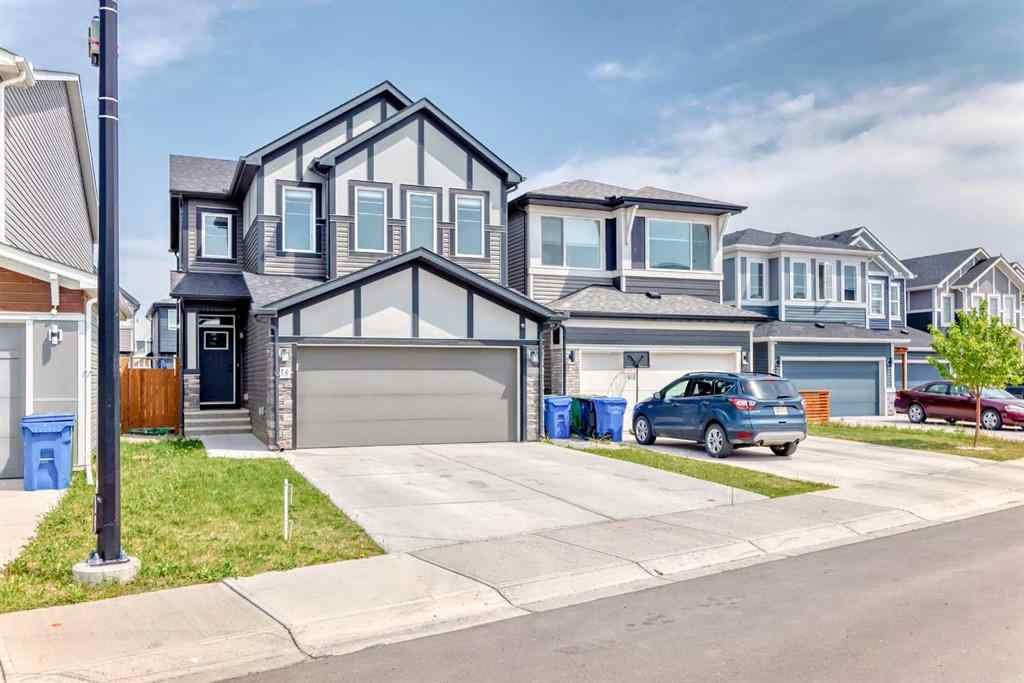
A first-time buyer in Calgary can stack four things on the same purchase: $40,000 of First Home Savings Account room, $60,000 of Home Buyers’ Plan room, a GST rebate worth up to $50,000 on a new build, and the fact that Alberta has no land transfer tax at all.
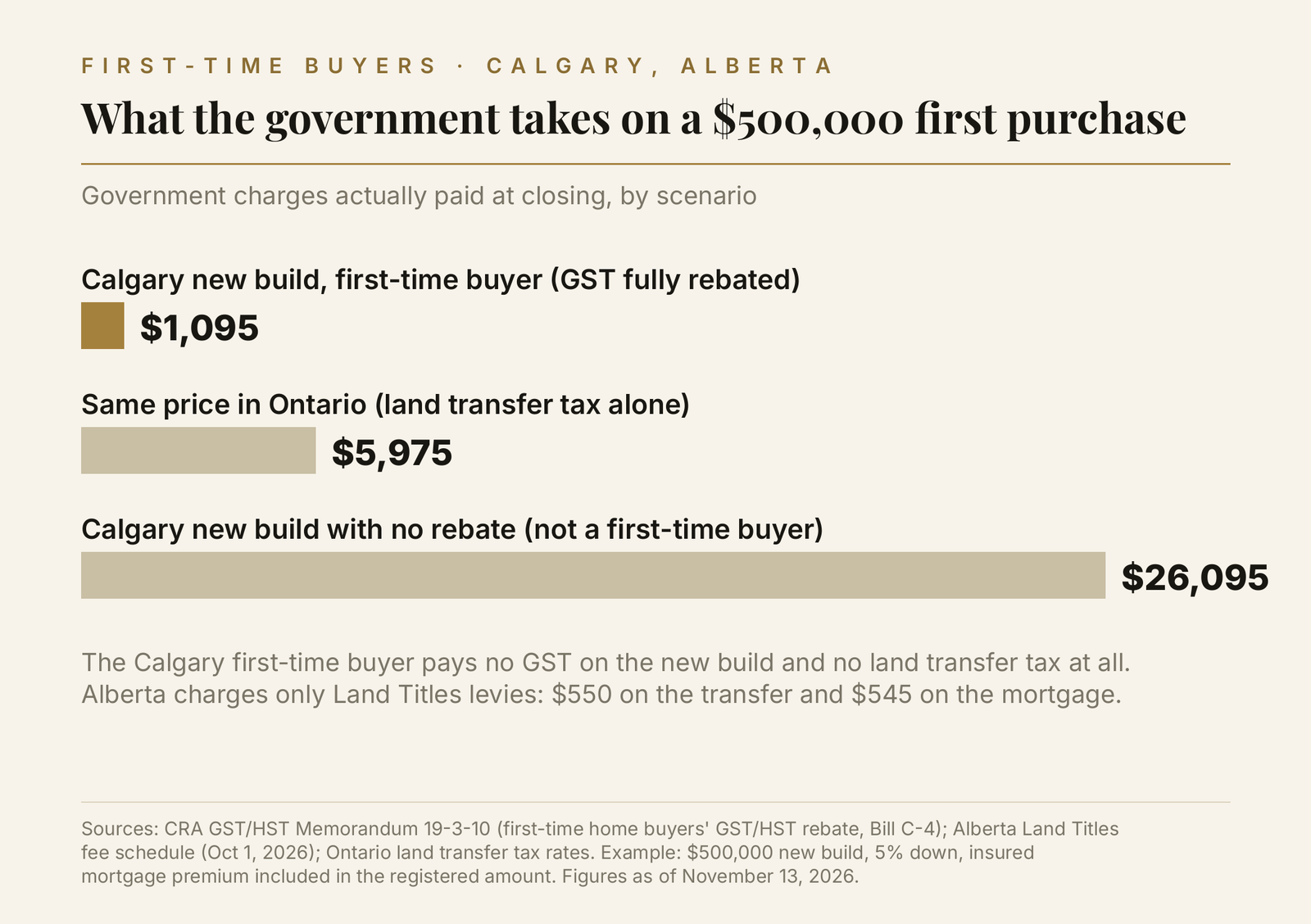
On a $500,000 new build in Calgary, a prepared buyer gets the full $25,000 of GST back and pays $1,095 in government registration charges. The same purchase in Ontario starts with $5,975 in provincial land transfer tax alone, before Toronto adds its second tax.
Here is the part most people get wrong: the stack rarely fails on eligibility. It fails on sequence. Each program has one timing rule, and if you do the steps in the wrong order, the money is gone even though you qualified for it.
1. The first-time buyer GST rebate: $25,000 back on a $500,000 new build
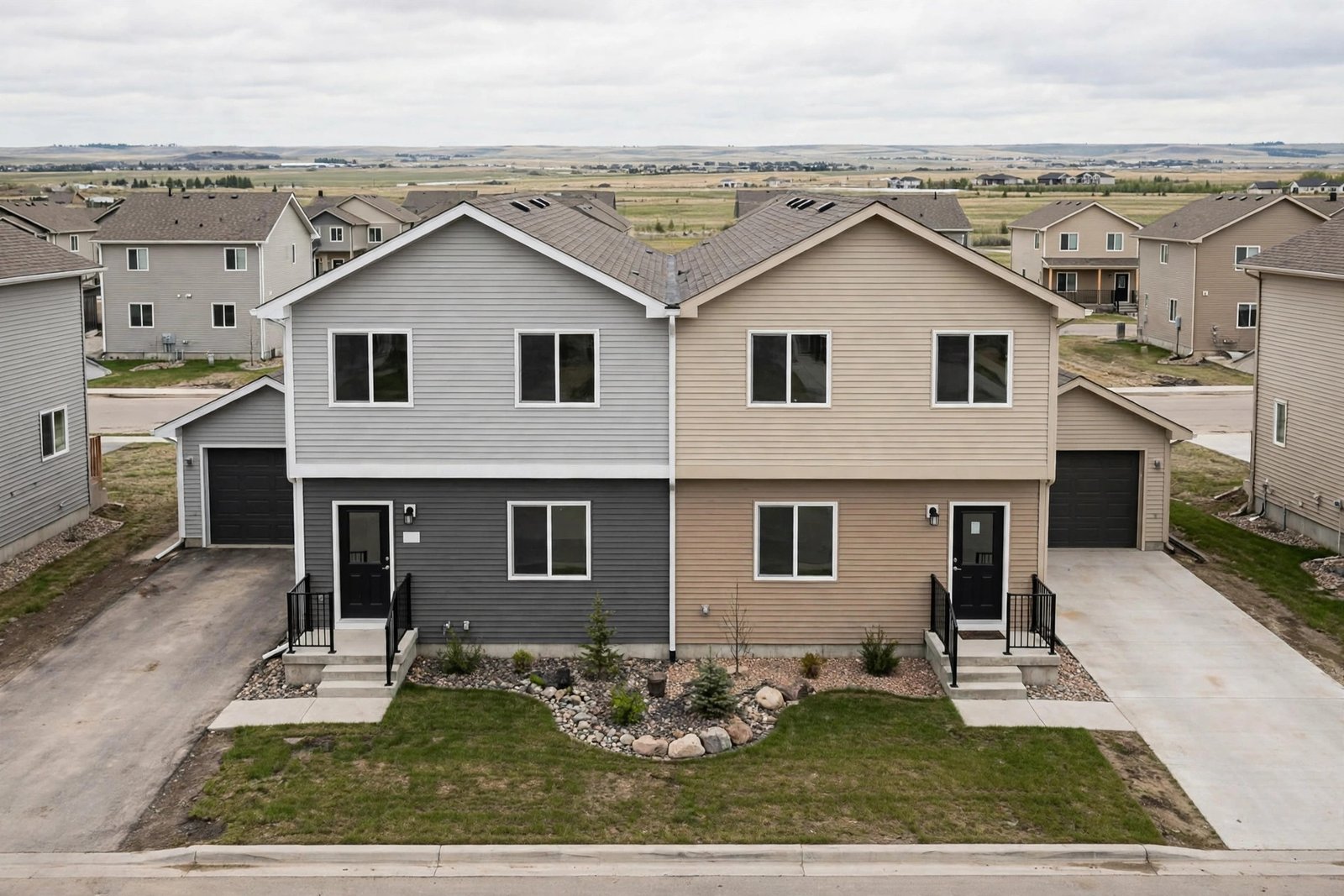
The federal first-time home buyers’ GST/HST rebate returns 100% of the GST on a new or substantially renovated home priced up to $1,000,000, to a maximum rebate of $50,000. The rebate phases out between $1,000,000 and $1,500,000 and is gone above that. Alberta charges GST only, at 5%, so a Calgary buyer gets the full 5% back: $25,000 on a $500,000 home.
The traps, in order of how often I see them:
- The agreement date. Your builder agreement must be dated on or after March 20, 2025. Sign in February 2025 and the rebate does not exist for you, no matter when you take possession.
- Once in a lifetime. You can claim it once. If you have used it, it is used up.
- First to occupy. You have to be the first person to live in the home, and it has to be your primary residence.
- The definition of first-time buyer. You have not lived in a home owned by you or your spouse or partner in the current calendar year or the previous four calendar years.
One more practical point: the $25,000 comes back to you after the fact in most builder setups. Your mortgage and your cash to close still have to cover the full price plus GST on closing day, so plan the cash flow, not just the net price.
2. The FHSA: the account you should have opened already
The First Home Savings Account gives you $8,000 of contribution room per year, up to a $40,000 lifetime maximum. Contributions are tax deductible, and a qualifying withdrawal for your first home is tax free, with nothing to repay.
The rule that costs people real money: room only starts accruing in the year you open the account. Open it in 2026 and buy in 2028, and you have three years of room, $24,000. Wait until 2028 to open it, and you have $8,000. Same buyer, same home, $16,000 of tax shelter lost to a form that takes ten minutes.
If you are even thinking about buying a first home in the next few years, open the FHSA this calendar year. You do not have to fund it heavily right away. The room is the asset.
The room itself runs on a clock that starts the day you open the account, and a year of it is lost every December 31: Open your FHSA before December 31.
3. The Home Buyers’ Plan: $60,000 of your RRSP, with a 90-day clock
The Home Buyers’ Plan lets a first-time buyer pull up to $60,000 out of an RRSP, tax free, toward a first home. A couple buying together can pull $120,000. You repay it over 15 years, at 1/15 of the balance per year, with repayments normally starting in the second year after the withdrawal.
Its timing rule is the mirror image of the FHSA’s: the money has to sit in your RRSP for at least 90 days before you withdraw it, or the tax deduction on that contribution can be denied. Moving money into an RRSP the week before closing and pulling it straight back out does not work.
And yes, the FHSA and the Home Buyers’ Plan stack on the same purchase. One buyer can use both: up to $40,000 from the FHSA and $60,000 from the RRSP, $100,000 of tax-advantaged savings aimed at one down payment.
4. Alberta’s missing tax: $1,095 instead of $5,975
Alberta has no land transfer tax. What you pay at Land Titles is two registration levies, and both are small:
- Transfer levy on a $500,000 purchase: $50 plus $5 per $5,000 of value = $550
- Mortgage levy on the registered mortgage: the same formula on $494,000 (the $475,000 mortgage plus the $19,000 insured premium) = $545
Total: $1,095.
On the same $500,000 purchase, Ontario’s provincial land transfer tax alone is $5,975, and a Toronto purchase pays a second municipal tax on top of that. If GST applied and no rebate was claimed, a Calgary buyer would be looking at $26,095 in government charges instead of $1,095. The difference between those two numbers is not luck. It is preparation.
The worked example: a $500,000 Calgary new build
- Purchase price: $500,000
- Minimum down payment at 5%: $25,000
- Mortgage: $475,000, plus the 4.00% insured mortgage premium of $19,000, for a registered mortgage of $494,000
- GST at 5%: $25,000, fully rebated under the first-time buyer GST rebate
- Alberta registration levies: $1,095
- Down payment and closing funds can be assembled from the FHSA (up to $40,000) and the Home Buyers’ Plan (up to $60,000)
The order of operations
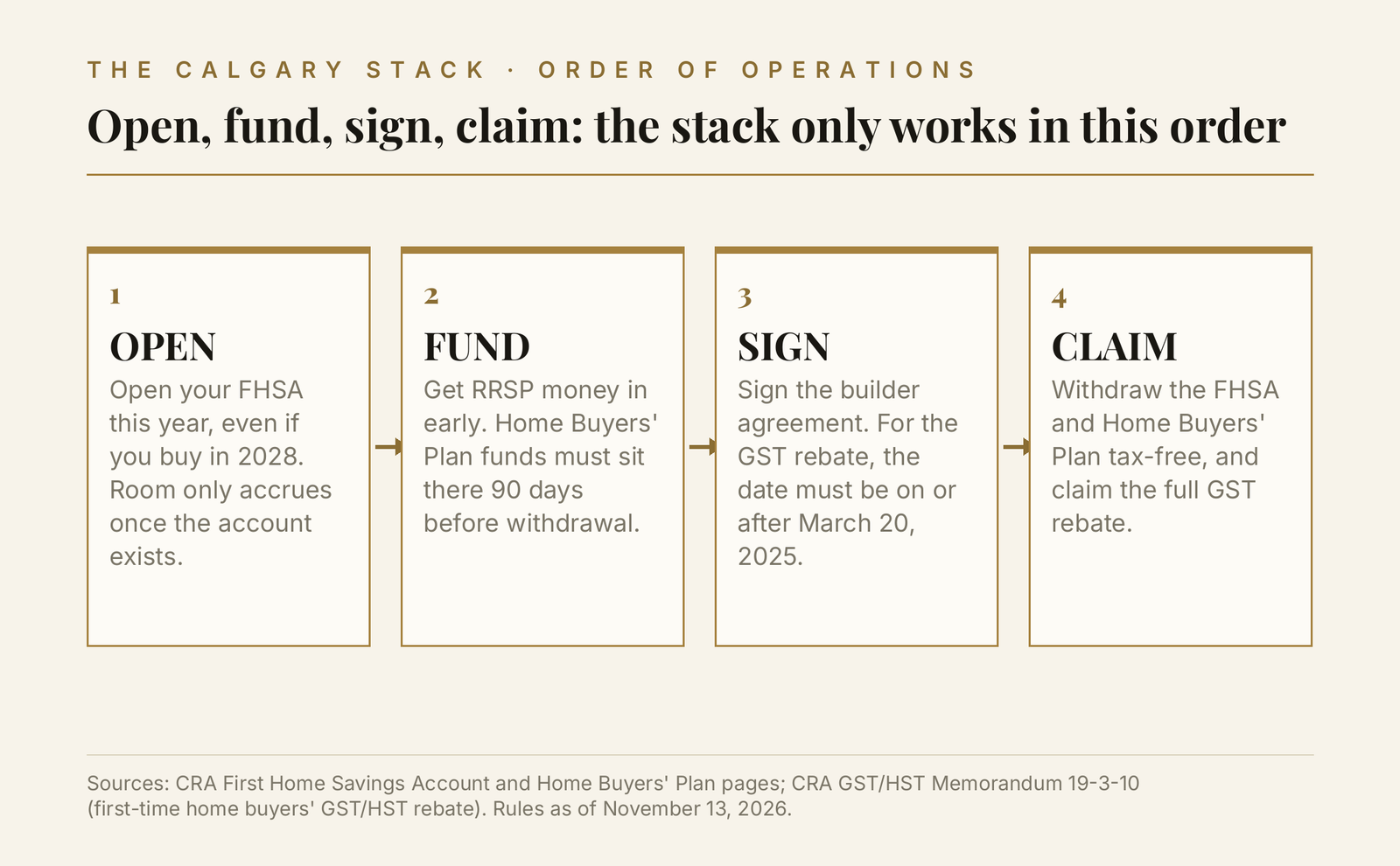
- Open the FHSA now, in this calendar year, so the room starts accruing.
- Fund both accounts on schedule: FHSA contributions as room builds, and RRSP money in place at least 90 days before you plan to withdraw it.
- Sign the builder agreement dated on or after March 20, 2025, and confirm the GST rebate treatment with the builder before you sign, not after.
- Claim in the right sequence at purchase: FHSA withdrawal, Home Buyers’ Plan withdrawal, then the GST rebate application, with the Alberta levies paid at registration.
Questions I get asked
Can I use the FHSA and the Home Buyers’ Plan on the same home?
Yes. They are separate programs and CRA allows both on one qualifying purchase, as long as you meet each program’s own rules.
Does the GST rebate apply to a resale home?
No. It applies to new or substantially renovated homes only, which is one reason the math on a Calgary new build can beat a resale at the same sticker price.
My builder agreement is dated before March 20, 2025. Can I still get the rebate?
No. The agreement date is a hard cutoff. If you have not signed yet, the date on the agreement matters as much as the price.
Do I pay land transfer tax in Alberta?
No. Alberta has never had one. You pay the two Land Titles registration levies, which came to $1,095 on the $500,000 example above.
Buying your first home in Calgary?
The programs are generous and the order is unforgiving. If you want the sequence checked against your own dates before you sign anything, book a call with me at cal.com/buildwithaky or call 403-473-0026.
Planning your move to Canada as well? Start with my guide to buying in Canada with no credit history, because newcomers stack these same programs once they qualify.
Program rules: Canada Revenue Agency, First Home Savings Account · Canada Revenue Agency, Home Buyers’ Plan · CRA GST/HST Memorandum 19-3-10, First-Time Home Buyers’ GST/HST Rebate · Alberta Land Titles fee schedule
This article is education, not financial advice. Program rules and amounts are as published by CRA and the Government of Alberta as of November 2026 and can change. Confirm your own eligibility before you rely on any figure here.
This article provides general information. Mortgage options and eligibility depend on your circumstances and lender requirements. Speak with Aky about your situation.